It’s Tuesday night. After a long day, you open the refrigerator—not exactly starving, but not entirely satisfied either. And there it is again: half a head of broccoli, seemingly asking, “What happened to your healthy eating plan this week?” You bought it with the best of intentions. Then the same old story—chop it, put it in the steamer, and a few minutes later, you have a soft, slightly sad-looking vegetable on your plate that smells like a school cafeteria.
The strangest part is that we convince ourselves we’re doing the right thing. “I steam my vegetables, so I’m healthy.” But now, nutritional science is slowly telling a different story. The truth is, steaming isn’t always the best method, especially when it comes to a delicate vegetable like broccoli.
So the question arises—is the secret to preserving all of broccoli’s nutrients hidden somewhere else?
[also_read id=”2565″]
Why Steaming Isn’t Always the Best Method for Broccoli
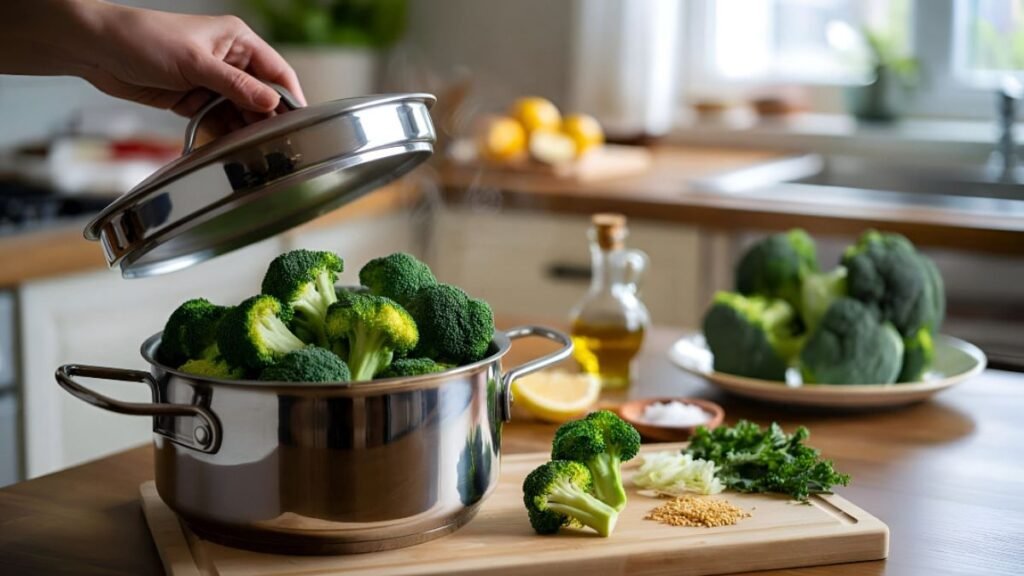
These days, steaming has become a kind of “health symbol.” Ask around at the office, check social media—everyone seems to be saying, “I steam my vegetables, so I’m fit.” The logic seems sound. No oil, no fried food, no burnt bits.
But broccoli is a little different from other vegetables. The special compounds it contains—like vitamin C and sulforaphane—are quite sensitive. They react quickly to both temperature and time. Quick, gentle cooking can benefit them, but prolonged exposure to heat and water can damage them.
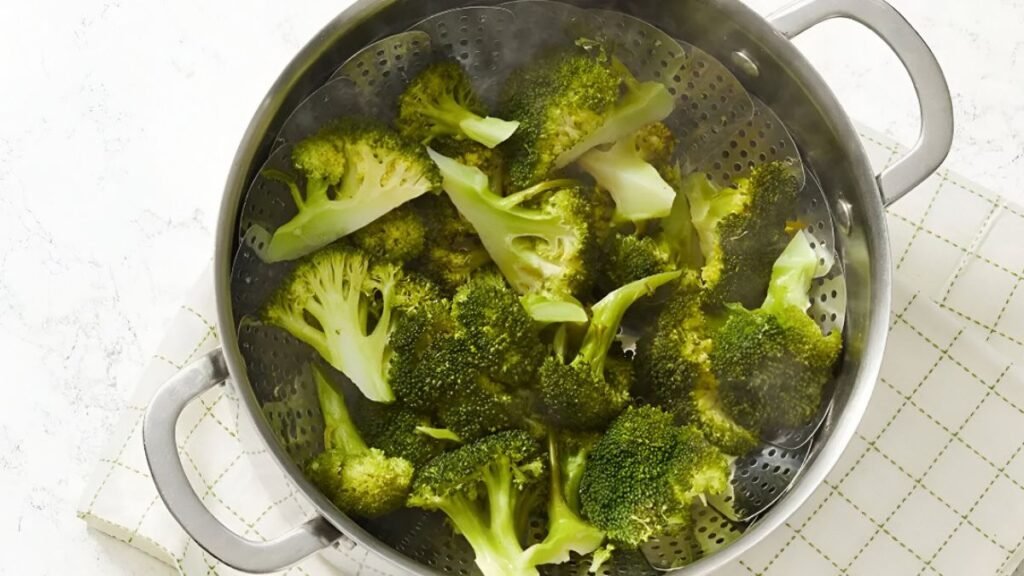
Several studies show that if broccoli is steamed for more than 5 minutes, its vitamin C content is significantly reduced. Now, be honest—how often do you set a timer and turn off the steamer at precisely the right moment? Often, we get distracted by checking messages, setting the table, or doing something else, and the broccoli ends up overcooked.
Most importantly, there’s sulforaphane, which is known for its anti-inflammatory properties and its potential to protect against certain diseases. It contains an enzyme that activates it, but this enzyme is quickly destroyed by high heat. This means that broccoli cooked for too long remains healthy but loses some of its “superpowers.”
The real question: To steam or not to steam?
This isn’t the right question. The real question is how much and how to cook broccoli. Completely raw broccoli isn’t everyone’s favorite and can be difficult to digest. On the other hand, overcooking destroys nutrients.
The conclusion is clear—we need a middle ground. And this is the approach that nutrition experts are increasingly recommending.
The better way: Pan-cooking for a short time
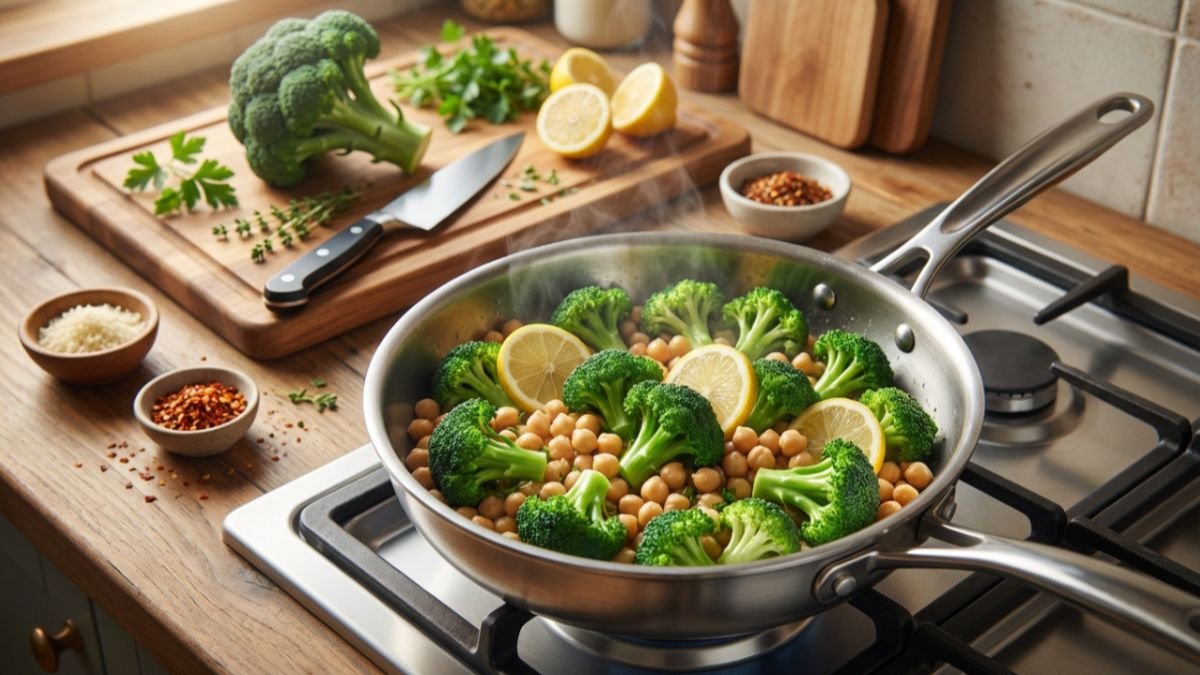
The most effective and easiest way to cook broccoli is light pan-cooking, with very little water.
The method is quite simple. Cut the broccoli into small florets so that it cooks quickly. Heat a wide pan over medium heat, add a little olive oil, and sauté the broccoli for 2 minutes. Then add just 2–3 tablespoons of water and cover the pan.
After 3–4 minutes, remove the lid. The broccoli should be bright green and still slightly firm when pierced with a fork. This is the perfect point. Not too soft, not mushy at all.
Finally, add a little salt, lemon juice, or garlic—and you’re done. A total of 5–8 minutes and just one pan.
Where We Often Go Wrong
Most of the damage is done by doing “too much”—too much water, too much time, too much reheating. Boiling is the worst method because most of the vitamins leach into the water, which is then thrown away. Steaming for too long does much the same.
Then there’s the “batch cooking for the week” trap. You cook a large quantity of broccoli and then reheat it repeatedly in the microwave. Each time, a little more of the nutrients are lost. The fiber remains, but the real power gradually disappears.
Small Changes That Make a Big Difference
If you want to preserve nutrients in your daily life, a few habits help:
- Cut the broccoli florets into equal sizes.
- Use a wide pan so it doesn’t get submerged in steam.
- Turn off the heat as soon as the color turns bright green.
- Try to eat it the same day.
- Occasionally add a little raw broccoli to cooked dishes.
These small steps have a big impact in the long run.
[also_read id=”2360″]
Easy Recipes You’ll Actually Want to Make
Once you get the hang of pan-cooking, broccoli is no longer just a side dish. For example, a one-pan broccoli and chickpea dish. Combine lightly cooked broccoli with boiled chickpeas, olive oil, lemon zest, salt, pepper, and a little smoked paprika. Top with some seeds or nuts—and you have a complete meal.
Another great option is a “half-raw salad.” Lightly cook half of the broccoli, and finely chop the other half raw. Combine both with olive oil, lemon, salt, and a little cheese. The raw portion provides enzymes that enhance the absorption of nutrients from the cooked broccoli.
Love pasta? Quickly pan-cook broccoli with garlic and chili, add whole wheat pasta, and add a little pasta water to create a creamy texture. Healthy and comforting.
Broccoli that fits into your lifestyle
The real goal isn’t to make everything “perfect.” The goal is to create meals that fit into your life. Meals that can be prepared after work, without feeling like a chore.
Taste and enjoyment are just as important as nutrients. A little oil, a squeeze of lemon, a few nuts—these aren’t the enemy but rather helpful allies. They make food something you’ll want to eat again and again.
Conclusion: Not goodbye to streaming, but hello to common sense
Perhaps we should say goodbye not to steaming, but to the idea that healthy food always has to be bland and feel like a punishment. Lightly sauté your broccoli, add some raw elements, and enjoy it the way you enjoy life.
The next time that broccoli in your refrigerator stares back at you, you’ll know to treat it with respect, not disdain—just 5-8 minutes, a hot pan, and a little common sense.
| Key Point | Detail | Value for the Reader |
|---|---|---|
| Quick pan-cooking beats long steaming | Short cooking time, little water, lid on briefly, then off | Preserves more vitamins and flavor with almost no extra effort |
| Half-raw, half-cooked broccoli is a smart combo | Mix raw chopped florets with lightly cooked ones | Boosts sulforaphane potential while staying pleasant to eat |
| One-pan recipes change the habit | Broccoli with chickpeas, pasta, or grains cooked in the same pan |
FAQs
Q. Is pan-cooking broccoli better than steaming?
A. Yes, quick pan-cooking preserves more vitamins and flavor than long steaming.
Q. Yes, quick pan-cooking preserves more vitamins and flavor than long steaming.
A. Combining both helps increase sulforaphane benefits while keeping the texture enjoyable.
Q. Does cooking broccoli destroy nutrients?
A. Overcooking can reduce nutrients, but short cooking times help retain them.
Q. Are one-pan broccoli meals healthy?
A. Yes, they are nutritious, balanced, and make healthy eating easier on busy days.
Q. What’s the easiest way to eat broccoli regularly?
A. Use quick one-pan recipes with grains, pasta, or legumes for convenience and taste.