
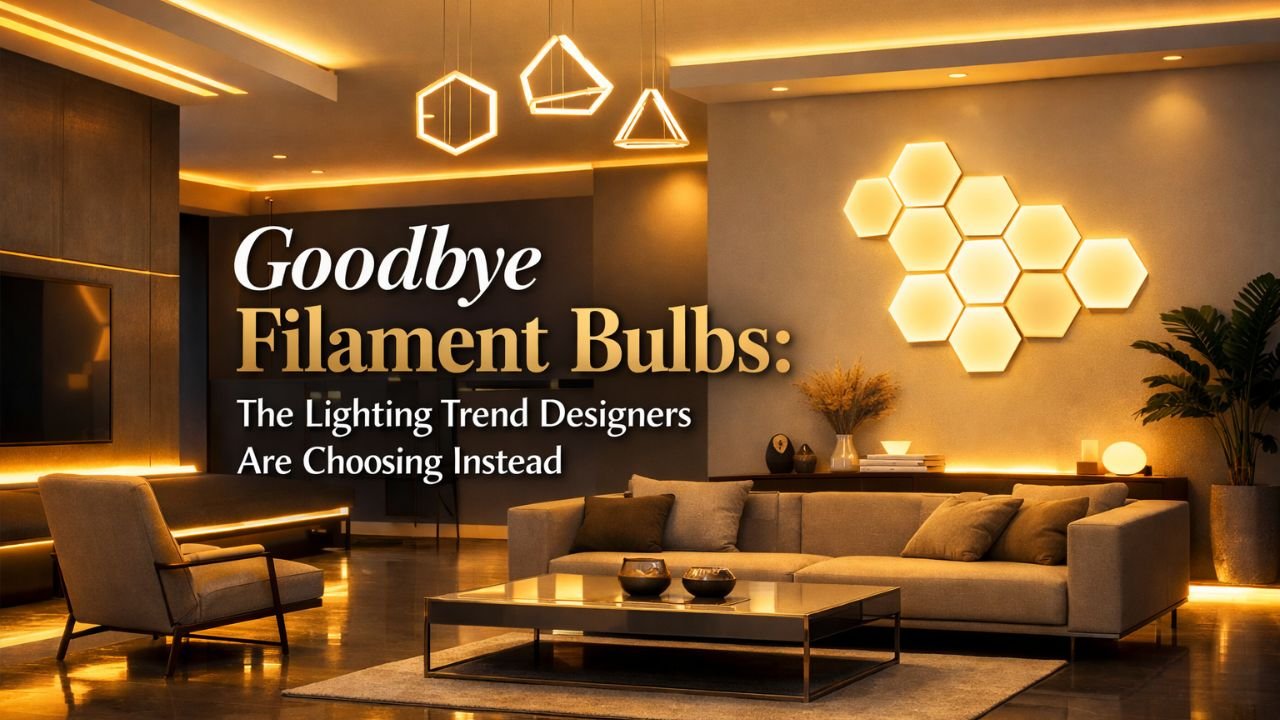
The approach to lighting in stylish homes is gradually shifting. While open filament bulbs, black metal rails, and an industrial look dominated for several years, designers are now focusing on lighting that is warm, soft, and crafted with care. As the days grow shorter and the evenings longer, people are seeking lighting solutions that not only illuminate but also transform the mood and feel of a room. Today’s home aspires to be a comforting private sanctuary, not a café or a factory.
The End of the Industrial Era: When an Icon Became a Cliché
For nearly a decade, exposed filament bulbs were considered modern and trendy. Bulbs hanging from coffee shop ceilings, black cables over bar counters, and a New York warehouse vibe in homes—it was an easy way to achieve an “urban cool” look on a budget. The warm amber glass, visible filaments, and metal fittings created the feeling that every kitchen was part of an artist’s studio. Social media further fueled this trend, with glowing bulbs appearing everywhere alongside exposed brick walls and latte cups.
But trends don’t last forever. By 2025, these exposed bulbs began to feel dated to many. What once seemed bold and experimental now felt repetitive. Designers believe this look no longer reflects personal taste but has become a mere imitation of a bygone era. The “cool café” aesthetic is no longer fresh or original in homes.
[also_read id=”3065″]
What Designers Dislike About 2025 Interiors
Today’s interior professionals are moving away from designs that are too raw or factory-like. Words like “emotional comfort” are becoming more common in their conversations. People want rooms that offer respite, not constant reminders of a downtown bar setting.
Exposed filament bulbs simply don’t fit into this shift. Their stark brightness and hard metal fittings are reminiscent of factory lighting, not a soft and layered ambiance. When used in groups, they flatten the room’s depth, and the eye is drawn directly to the bulbs themselves. Today’s mood is the opposite—texture, tranquility, and subtly dramatic lighting. Materials like blown glass, matte ceramics, light wood, and brass with a gentle patina are being used, where the light is filtered and its source is concealed.
What’s Replacing the Filament Bulb?
Decorative and Smart LEDs: When Technology Gets Softer
LEDs used to mean cold, white, and boring light, but that perception is now outdated. Since 2024, decorative LED bulbs have been appearing in designs that look more like art objects than simple light sources. Opal glass tubes, smoky or tea-colored globe bulbs, and organic shapes are now common in minimalist and Japandi-inspired interiors. Their glass diffuses the light, creating a calming glow rather than a harsh glare.
In terms of technology, most LEDs can now be connected to apps or voice assistants. Changing the light tone throughout the day, dimming from the comfort of your sofa, or setting different scenes has become easy. In smaller homes, where one room serves multiple purposes, this flexibility is invaluable. Crucially, modern LEDs can almost perfectly replicate the warmth of old filament bulbs, but use about ten times less energy.
Statement Lamps and Bold Fixtures
Another major shift is that lighting is now making a statement rather than blending in. Instead of simple ceiling fittings, people are making their main light a focal point of the room. Large rattan or wicker pendants above the dining table, irregularly glazed ceramic lamps on sideboards, and handcrafted glass shades cast colorful light onto the walls. Color is also making a comeback—soft teal, muted terracotta, wine tones, and smoky green. When lit, these colors cast a subtle tint on the room’s atmosphere, like sitting under a soft filter. The goal isn’t to create a themed space, but rather an environment that instantly shifts your mood.
A Changing Ambiance, Room by Room
You don’t need a major renovation to ditch the harsh overhead lighting. A few well-chosen changes can transform the look of an entire room, especially as the evenings grow longer. In the living room, replace a stark metal bar with a large rattan pendant and two dimmable floor lamps. In the kitchen, swap a single bright bulb above the table for warm LED strips under the cabinets and a small, opaque pendant. In the bedroom, replace an industrial cage lamp with a lamp with a soft glass or fabric shade for a calming pre-sleep atmosphere.
Layering is key today. Instead of relying on a single bright ceiling light, the focus is on balancing general, task, and accent lighting. Multiple light sources at varying heights, even if the total wattage is the same, create a more beautiful and comfortable ambiance.
Cost, Maintenance, and Environmental Considerations
From a practical standpoint, LEDs also reduce hassle. Many bulbs last 15,000 to 30,000 hours, meaning you won’t need to replace them for a decade. They also run cool, making them safe for paper shades, fabric diffusers, and children’s rooms.
With rising electricity bills, every watt counts. Switching from incandescent to LED makes a noticeable difference in annual consumption, especially in rooms where lights are on for extended periods. Smart controls further enhance this, automatically dimming or turning off lights when a room is empty. Plus, many brands now offer fixtures made with natural fibers, certified sustainable materials, andThey are emphasizing fixtures made from wood and recycled glass to ensure the design is also sustainable.
How to Choose the Right Lighting
Besides style, it’s important to understand some technical aspects. Color temperature, measured in Kelvin, determines the mood of a room—2700K is warm and cozy for bedrooms and living rooms, 3000–3500K is suitable for kitchens and dining areas, while 4000K or higher is better for desks and worktops. Brightness should be considered in lumens, not watts. Understanding this difference with LEDs will save you from disappointment.
[also_read id=”2971″]
Small Experiments, Big Impact
Lighting is also an easy way to zone your home and set routines. A soft, warm light in the evening signals relaxation to the body, while a cool desk light in the morning enhances focus. Even without a smart system, you can change the ambiance with a dimmer switch or by placing two different lamps in the same corner. These small changes move away from industrial clichés and make your home more personal.
As filament bulbs go out of style, they are not only making way for new designs but also changing our relationship with light. Today’s home is moving towards soft glows, handcrafted shades, and intelligent technology where the technology remains in the background and the atmosphere takes center stage.
FAQs
1. Why are filament bulbs going out of style?
Because they feel visually outdated and create harsh, industrial lighting that no longer matches today’s preference for warm and comfortable homes.
2. What lighting trend is replacing exposed filament bulbs?
Soft decorative LEDs, textured shades, and statement lamps made from glass, ceramic, wood, and natural fibers are now preferred.
3. Are modern LEDs warm enough for cozy interiors?
Yes, today’s LEDs can mimic the warm amber glow of traditional bulbs while offering better control and comfort.
4. Do new lighting options save energy?
Absolutely. LEDs use up to 80% less electricity and last much longer than filament or incandescent bulbs.
5. Can lighting really change how a room feels?
Yes, layered lighting with soft, diffused sources can make spaces feel calmer, warmer, and more inviting.