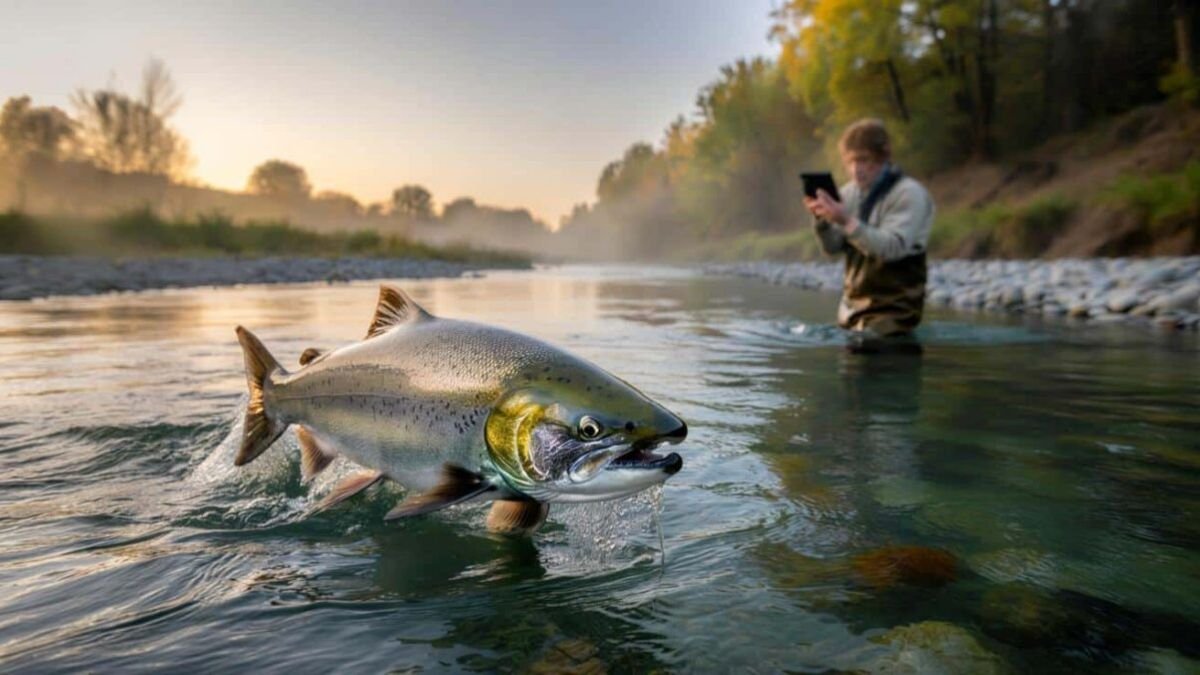
When nature performs a miracle, it touches not only the hearts of scientists but also those of ordinary people. The return of Chinook salmon to a California river after 100 years is one such historic and emotional moment. This event is not just the story of a fish’s return but a complete saga of nature’s resilience, human mistakes, and subsequent efforts at correction. The reappearance of this salmon in a river from which it had completely disappeared has emerged as a new ray of hope.
Who is the Chinook salmon, and why is it so special?
The Chinook salmon, also known as the “King Salmon,” is one of the largest and most important salmon species in the Pacific Ocean. These fish spend a large part of their lives in the ocean but return to the exact river where they were born to spawn. This natural memory and migratory ability have always been a subject of fascination for science. California’s rivers were once teeming with Chinook salmon, but over time, this scene completely changed.
How did the Chinook salmon disappear?
About a century ago, large-scale dams were built in California, rivers were diverted, and industrial pollution increased rapidly. All of this had the biggest impact on the natural flow of the rivers. Species like the Chinook salmon, which depend on clean water and unobstructed flow, gradually disappeared from these rivers. In some rivers, the situation became so dire that scientists believed the return of salmon would never be possible.
Return after 100 years: How was this possible?
This historic return is not the result of a single day or a single year’s effort, but decades of hard work. Environmental organizations, scientists, and local communities worked together on river restoration. Old and obsolete dams were removed, water quality was improved, and safe passages were created for the fish. It was a long and expensive process, but the result is now evident for all to see—the return of a Chinook salmon to its birthplace.
Scientists’ and Environmentalists’ Reaction
For scientists, this event is like a dream come true. Many researchers had spent their entire careers hoping to one day see Chinook salmon in this river again. According to them, this is not just a single fish but a sign that the river’s ecosystem is slowly recovering. If a sensitive species can return, it means the entire environment is moving towards balance.
What This Return Means for the Local Community
For the local indigenous communities and people living near the river, the Chinook salmon is not just an animal but an integral part of their culture and traditions. Stories, festivals, and food traditions associated with salmon have been passed down through generations. Many see its return after 100 years as a return of their cultural identity. This event is also deeply emotional for those who had only heard stories about salmon from their elders.
Will This Return Be Permanent?
While this event is extremely positive, experts are also warning that this is just the beginning. The return of one or a few fish does not mean the problem is completely solved. Climate change, drought, and rising temperatures still pose significant challenges. If the river flow is disrupted again or water quality deteriorates, this progress could be jeopardized. Therefore, it is crucial to continue conservation efforts.
Climate Change and the Future of Salmon
Chinook salmon depend on cold, clean water. Rising river temperatures due to climate change are becoming their biggest challenge. Experts say that if global warming is not controlled, maintaining such a historic return in the future may be difficult. This is why this event is being seen not only as a local success but also as both a global warning and an inspiration.
The Powerful Message of Conservation
The biggest message of this story is that if humans are willing, nature can be given a second chance. Despite decades of mistakes, the right policies and sincere efforts can bring about positive change. The return of the Chinook salmon proves that environmental conservation is not just about preventing further damage but also about the power to restore what has been lost.
Hope for Future Generations
When children and young people read this news today, they can understand that protecting the environment is not just a topic in textbooks. It can bring about real-world change. If the right decisions are made today, future generations can once again see salmon swimming in the rivers—not just in pictures or stories, but with their own eyes.
Conclusion: More Than Just a Fish
The return of the Chinook salmon to its native river in California after 100 years is not just a biological event; it is a triumph of human hope, perseverance, and responsibility. It reminds us that while it is easy to completely destroy nature, it is also difficult but possible to save it. This historic moment signals a new beginning—for the rivers, for the wildlife, and for humanity itself.