
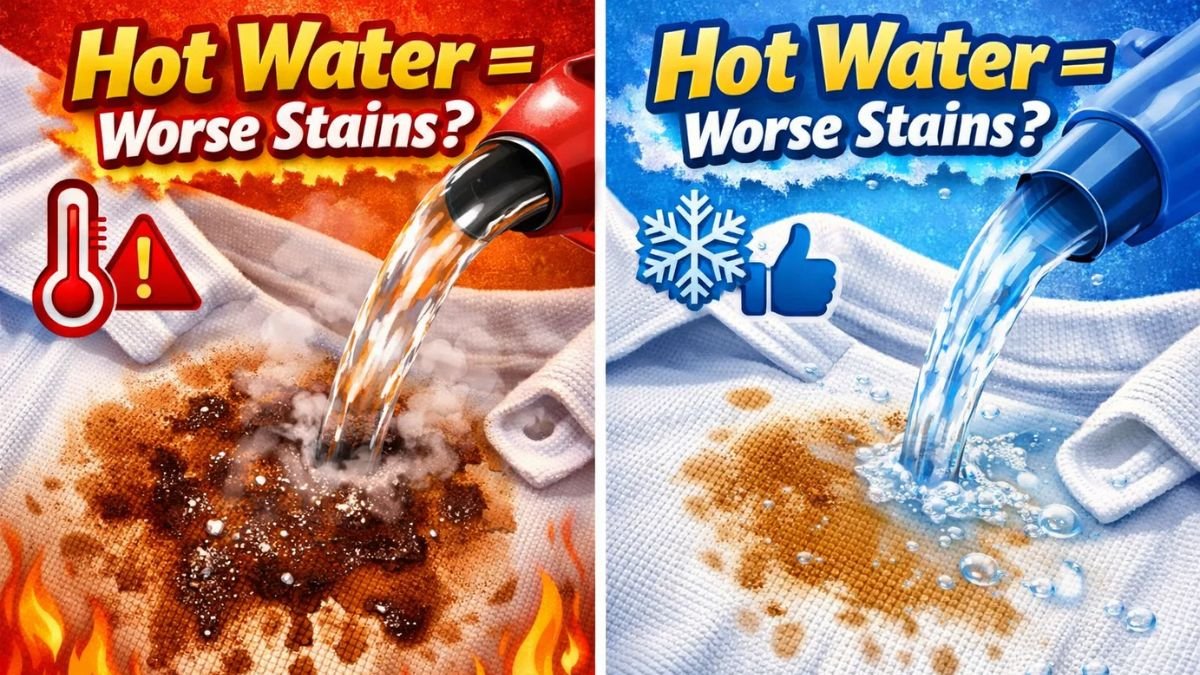
Accidents happen — a splash of coffee on your shirt, a sudden spill of juice on your couch, or a drop of makeup landing exactly where it shouldn’t. And in that little moment of panic, most of us instinctively do one thing: rush to the nearest tap, crank it to hot, and start scrubbing like our life depends on it.
But here’s the surprising truth few people realize until it’s too late: hot water can actually make many stains worse. Instead of helping, it can lock the stain deeper into the fabric, making the job ten times harder.
This article dives into the science, the common misconceptions, and the real-world situations where hot water is the enemy—not the hero—of stain removal. By the end, you will know exactly when to use cold water, when hot water works, and why temperature can be the deciding factor between a clean shirt and a permanent reminder of last night’s dinner.
The Instant Reaction: Why We Think Hot Water Helps
The idea that hot water is good for cleaning comes from basic household logic. Hot water dissolves oils, melts grease, and speeds up chemical reactions. So, naturally, people assume it works for all stains.
This assumption feels right, but it’s not always true. Hot water only works for certain types of dirt or residue. For many stains—especially the stubborn, protein-based ones—heat actually causes the exact opposite reaction.
How Hot Water Makes Certain Stains Worse
The biggest reason hot water can worsen stains is due to protein denaturation. This sounds like a complicated scientific term, but it simply means that heat causes proteins to change shape, tighten, and bind more firmly to fabric fibers.
Once this happens, the stain becomes almost “cooked into” the fabric, much like how eggs firm up in a pan.
Common stains that contain proteins include:
- Blood
- Sweat
- Milk
- Eggs
- Vomit
- Dairy-based sauces
- Baby formula
- Certain cosmetics
- Some pet stains
When hot water touches these, the proteins react instantly. Instead of dissolving, they cling harder.
The Heat Lock Effect: What Really Happens Inside the Fabric
Let’s imagine a drop of blood on a cotton shirt. At first, the blood sits on the surface. You could remove most of it with gentle rinsing.
But the moment hot water hits it, something irreversible takes place:
- The protein components of the stain begin to coagulate.
- These coagulated clumps attach tightly to the small fibers of the fabric.
- The stain sinks deeper into the threads.
- The color becomes more pronounced and harder to fade.
It’s essentially the same reaction as cooking. Instead of letting the stain flow away, heat locks it in.
That is why bloodstains washed in warm or hot water become brownish, stiff, and resistant to detergent.
Why Cold Water Is Often the Real Hero
Cold water does the opposite: it prevents proteins from binding deeply. It keeps the stain in a liquid, movable state so that it can be lifted away more easily.
Benefits of cold water include:
- It stops proteins from setting.
- It keeps pigments from spreading further.
- It prevents fibers from shrinking or tightening around the stain.
- It works well with pre-treatments, stain removers, or mild detergents.
In many stain emergencies, the very best first step is simple: rinse with cold water immediately.
Situations Where Hot Water Makes Stains Significantly Worse
While hot water isn’t always bad, there are specific situations where it almost guarantees disaster. These are the ones most people encounter without realizing the risks.
1. Blood on Clothing or Bedding
Blood reacts instantly to heat. Even lukewarm water can be enough to set it permanently. Once that happens, normal washing won’t fix it.
2. Sweat Stains on Fabrics
Sweat combined with deodorant forms a complex stain that heat can deepen. Instead of fading the yellow marks, hot water makes them richer and tougher to remove.
3. Dairy Spills on Carpets or Sofas
A splash of milk or yoghurt might seem harmless, but the protein content makes it a danger zone. Hot water spreads the stain and intensifies any smell.
4. Egg Residue on Towels or Clothing
Egg white reacts dramatically to heat. It clings and hardens, often leaving a brittle crust-like stain that becomes nearly impossible to wash out.
5. Baby Formula Stains
Formula contains proteins, fats, and sugars. Hot water binds the proteins and caramelizes the sugars, creating a double-layer problem.
6. Pet Urine or Vomit Stains
Using hot water here can actually worsen both the stain and the odor. The heat sets the proteins and intensifies the smell.
The Psychology of Panic Cleaning: Why Hot Water Feels Safe
When something spills, adrenaline kicks in. People want instant action. Hot water feels more “powerful,” more “sanitizing,” and more effective.
But this quick reaction often creates long-term frustration. In many cases, stains that would have been easy to remove become permanent solely because the wrong temperature was used in the first few seconds.
This is why understanding stain chemistry can save your clothes, furniture, and even money spent on replacements.
Hot Water Isn’t Always Bad — When It Actually Helps
While hot water can ruin some stains, it is genuinely useful for others.
Hot water works well for:
- Grease and oil stains
- Chocolate stains (after pre-treatment)
- Mud or clay after the initial rinse
- Heavily soiled cotton fabrics
- Certain food stains like tomato or curry after loosened with cold water first
- Sanitary reasons (bacteria removal) once the stain has already been treated
The key is knowing what type of stain you’re dealing with.
If a stain is oily or fatty, hot water can break it down effectively. But if a stain is protein-based, hot water is harmful.
How to Know Whether a Stain Needs Hot or Cold Water
Here’s a simple, practical rule anyone can follow:
Use cold water when the stain came from a living thing.
Blood, sweat, dairy, eggs, body fluids, or anything organic → Cold water only.
Use hot water when the stain came from oils, grease, or synthetic materials.
Cooking oil, mechanical grease, makeup foundation, and some dyes → Warm to hot water helps.
This simple distinction helps avoid most stain-setting mistakes.
Expert-Style Process for Treating Stains Properly
When in doubt, always start with cold water first. If you later discover the stain wasn’t protein-based, switching to warm water won’t cause damage.
Here is a safe step-by-step method that works for most situations:
Step 1: Blot, Don’t Rub
- Blotting prevents the stain from spreading deeper.
- Rubbing creates friction, heat, and distortion.
Step 2: Rinse Under Cold Water First
- Cold water removes surface residue.
- It prevents premature protein setting.
Step 3: Apply a Pre-treatment
- Mild detergent
- Stain remover
- Baking soda paste
- Vinegar solution (for non-protein stains)
Step 4: Gently Work the Stain
- Light circular motions
- Avoid scrubbing aggressively
Step 5: Wash with the Correct Temperature
- For protein stains → Stay with cold water
- For oily stains → Switch to warm or hot water
Step 6: Air-Dry Before Inspecting
- Heat from dryers can permanently set leftover stains.
- Always air-dry first, check, then repeat if needed.
This method reduces mistakes and increases your success rate dramatically.
Why Fabric Type Also Affects the Outcome
Different fabrics react differently to heat. If the material is delicate, heat causes shrinking or warping, which can squeeze the stain further into the fibers.
Fabrics sensitive to hot water include:
- Silk
- Wool
- Rayon
- Cashmere
- Linen
- Some synthetics
These materials benefit from cold water in almost every stain situation.
Meanwhile, sturdier fabrics like cotton or polyester may tolerate hot water better—but only if the stain type allows it.
Common Household Myths About Hot Water and Stains
Many cleaning habits come from tradition, not science. Some myths still lead to ruined clothes daily.
Myth 1: Hot Water Cleans Everything Better
False. It can lock in many stains.
Myth 2: The More Heat, the Faster the Cleaning
Not always. Sometimes heat causes instant, irreversible damage.
Myth 3: Hot Water Removes Odors More Effectively
It can actually intensify smells when dealing with organic stains.
Myth 4: Hot Water Sterilizes Stained Fabric
It only sterilizes after the stain has been removed—not during the stain removal process.
Knowing these myths helps prevent avoidable mistakes.
Real-Life Examples Where Hot Water Ruined Clothing
These situations happen every day:
- A student washes a bloodstained uniform in hot water and the brown patch never disappears.
- A parent cleans baby formula spills with warm water, only to discover the fabric now has a yellow crust.
- Someone uses steaming hot water on a milk-saturated carpet, causing the odor to intensify.
- A worker rinses sweat-stained shirts in hot water, making the underarm stains darker over time.
All of these could have been prevented simply with cold water.
Conclusion: Cold Water First — Always
The idea that “hot water cleans better” is deeply rooted in habit, but not in science. When it comes to stain removal, hot water is not always your friend. In fact, for many stains—especially those that contain proteins—hot water is the fastest way to make the situation worse.
The safest and smartest approach is simple:
- Always start with cold water.
- Understand what kind of stain you’re dealing with.
- Only switch to warm or hot water when you’re certain it’s the right choice.
By knowing how temperature affects stains, you take control of the cleaning process instead of letting instinct lead you into mistakes. Your clothes last longer, your fabrics stay bright, and most importantly, you avoid the frustration of setting a stain that could have been removed easily.