
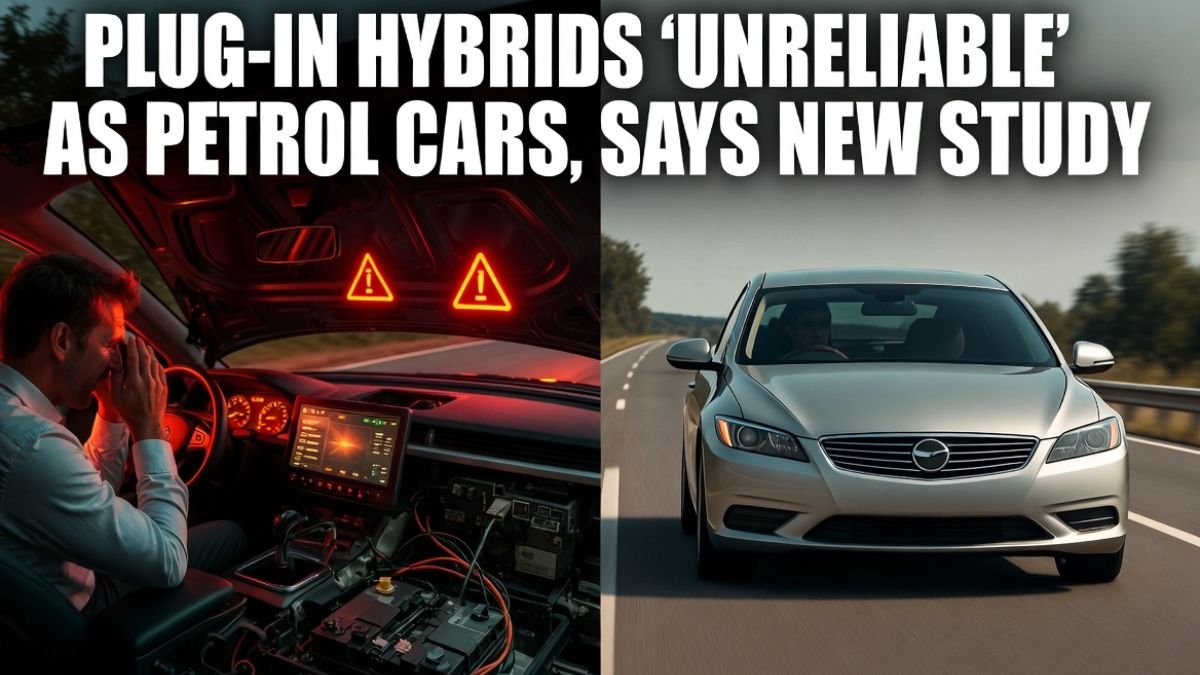
For years, plug-in hybrid vehicles were promoted as the perfect bridge between traditional petrol cars and a fully electric future. They promised the flexibility of fuel with the efficiency of electricity, offering drivers the best of both worlds. But new data comparing plug-in hybrids with conventional petrol cars has reignited a fierce debate, suggesting that plug-in hybrids experience up to 80 percent more failures. As this information circulates, many drivers are reacting with anger, frustration, and a growing sense of betrayal.
This is not just a technical discussion anymore. It has become a deeply personal issue for owners who invested in plug-in hybrids believing they were choosing a smarter, cleaner, and more reliable option.
What the New Data Is Really Saying
The latest figures making headlines focus on breakdowns, system malfunctions, and reliability complaints. According to the data, plug-in hybrids are failing far more often than petrol cars in everyday use. These failures are not limited to one area but spread across electrical systems, battery components, software controls, and traditional mechanical parts.
Petrol cars, by contrast, continue to benefit from decades of refinement. Their technology is familiar, predictable, and relatively straightforward. The comparison has made many drivers question whether the added complexity of plug-in hybrids is worth the promise of lower emissions and better fuel efficiency.
Why Plug-In Hybrids Are More Complex by Design
At the heart of the issue is complexity. A petrol car relies on one primary power system. A plug-in hybrid relies on two. It combines an internal combustion engine, an electric motor, a high-voltage battery, power electronics, charging hardware, and sophisticated software to manage how everything works together.
Each added system increases the chance of something going wrong. When one part fails, it can affect the entire vehicle. Drivers often find themselves facing warning lights they do not understand and faults that require specialized diagnostics rather than simple mechanical fixes.
The Types of Failures Drivers Are Reporting
Many plug-in hybrid owners report problems that feel overwhelming and unpredictable. Electrical faults are among the most common complaints. These include battery charging issues, sudden loss of electric range, and dashboard alerts that appear without clear explanations.
Software problems are another frequent source of frustration. Updates meant to improve performance sometimes introduce new glitches. Some drivers report their vehicles switching unexpectedly between electric and petrol modes or refusing to charge altogether.
Mechanical issues also persist. Because plug-in hybrids still have petrol engines, they can suffer from traditional wear and tear while also dealing with electric system failures. This dual vulnerability is a major reason behind the higher failure rates.
Why Petrol Cars Still Feel More Reliable
Petrol cars may not be perfect, but they are familiar. Their technology has been tested over decades and refined through countless iterations. Mechanics understand them, parts are widely available, and problems are usually straightforward to diagnose.
Drivers often describe petrol cars as predictable. When something goes wrong, there is a sense of clarity about what to expect. With plug-in hybrids, that clarity is often missing. A minor fault can trigger multiple warnings, leaving drivers anxious about safety and repair costs.
The Emotional Side of Driver Frustration
The anger surrounding this data is not just about numbers. It is about expectations. Many drivers chose plug-in hybrids because they believed they were making a responsible decision for both their wallets and the environment.
When those vehicles fail more often than expected, it feels personal. Owners talk about feeling misled by marketing messages that emphasized efficiency and innovation while downplaying complexity and long-term reliability risks. The frustration is amplified when repairs are expensive or delayed due to limited specialist availability.
Repair Costs and Maintenance Concerns
One of the most common complaints from plug-in hybrid owners is the cost of repairs. Electrical and battery-related issues often require specialized technicians and proprietary parts. These repairs can be significantly more expensive than fixing a traditional petrol engine problem.
Maintenance can also be confusing. Some drivers are unsure how often to service the petrol engine when the vehicle spends much of its time running on electricity. Others worry about battery degradation and what it means for long-term ownership.
Petrol car owners, on the other hand, usually face more predictable maintenance schedules and costs. This difference plays a big role in how drivers perceive reliability.
Are Driving Habits Making Things Worse?
Driving behavior may also influence failure rates. Plug-in hybrids are designed to be charged regularly and driven in a way that balances electric and petrol use. When owners do not charge them consistently or rely heavily on short trips, certain systems may not operate as intended.
This does not excuse the failures, but it highlights a mismatch between design assumptions and real-world use. Many drivers were never clearly educated on how to get the best reliability from their vehicles.
The Gap Between Marketing and Reality
Marketing has played a powerful role in shaping expectations. Plug-in hybrids were often advertised as low-maintenance, future-ready vehicles. The reality, according to many owners, feels more complicated.
When the promise of simplicity clashes with the experience of frequent faults, trust erodes. This is one reason the reaction to the data has been so intense. Drivers feel they were sold an idealized version of the technology rather than a realistic picture.
What Automakers Are Saying
Manufacturers generally respond by emphasizing that plug-in hybrid technology is still evolving. They argue that newer models are more reliable and that software updates will resolve many issues over time.
While this may be true, it does little to comfort drivers dealing with problems today. For many owners, reliability is not about future improvements but about how the car performs right now, especially when they depend on it for daily commuting or family needs.
The Environmental Question Still Matters
Despite the reliability concerns, many drivers remain conflicted. Plug-in hybrids do offer environmental benefits, especially when driven primarily on electric power. For some owners, this advantage still outweighs the frustration.
However, repeated failures and repairs also have environmental costs. Manufacturing replacement parts and transporting vehicles for service adds to the overall footprint. This raises difficult questions about whether unreliable technology truly delivers on its green promise.
What This Means for Buyers Right Now
For potential buyers, the data serves as a warning to look beyond fuel economy figures and incentives. Reliability, maintenance support, and long-term ownership costs deserve equal attention.
Some buyers may decide to stick with petrol cars for now, valuing proven reliability over innovation. Others may move directly to fully electric vehicles, hoping to avoid the dual complexity of plug-in hybrids.
The Bigger Picture of Automotive Transition
This controversy highlights a broader challenge in the transition to cleaner transportation. New technology often comes with growing pains. Early adopters benefit from innovation but also bear the risks of unrefined systems.
The frustration surrounding plug-in hybrids suggests that the transition needs to be more transparent. Drivers want honesty about trade-offs, not just optimism about benefits.
Can Plug-In Hybrids Regain Trust?
Rebuilding trust will require more than promises. Automakers will need to demonstrate improved reliability through real-world results, clearer communication, and better support for owners facing problems.
Longer warranties, simpler systems, and improved diagnostics could help ease concerns. Without these steps, the perception of plug-in hybrids as unreliable may continue to grow.
A Turning Point for Driver Confidence
The data showing 80 percent more failures has become a turning point in how drivers view plug-in hybrids. It has sparked anger, debate, and serious reflection about what reliability really means in an era of rapid technological change.
For now, petrol cars remain the benchmark for dependability in the eyes of many drivers. Whether plug-in hybrids can close that gap will depend on how quickly manufacturers address the issues that have left so many owners feeling frustrated.
Final Thoughts on the Growing Backlash
Plug-in hybrids were meant to simplify the journey toward cleaner mobility. Instead, for many drivers, they have complicated it. The anger surrounding higher failure rates is a reminder that innovation must be matched with reliability, transparency, and support.
As the automotive world continues to evolve, one lesson is clear. Drivers are willing to embrace change, but only when it delivers on its promises in the real world, not just on paper.