
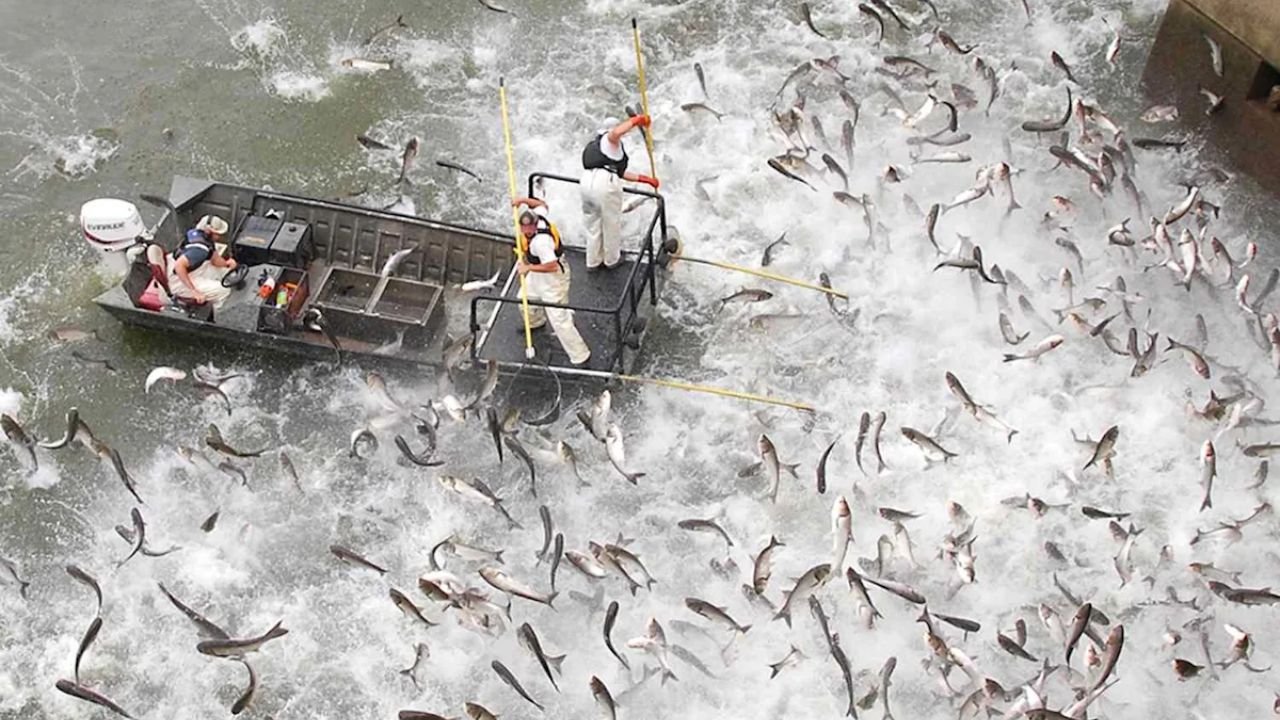
For the past four years, a unique and ambitious effort has been underway in Kansas to protect biodiversity. The Kansas Department of Wildlife and Parks (KDWP) has removed approximately 109,000 pounds of invasive carp from the Kansas River since 2022. This initiative aims to maintain ecological balance in the state’s major rivers and protect native fish species.
The year 2025 is proving to be the most successful year of this campaign so far. In this year alone, 36,863 pounds of fish were removed from the river, the largest annual number to date. According to KDWP expert biologist Liam Odell, this effort is yielding positive results for native aquatic life. They are now seeing the return of native fish species to areas of the river that were previously dominated by invasive carp.
Invasive Carp: The Threat and History
The invasive carp found in Kansas rivers belong to three species – silver carp, bighead carp, and black carp. These fish were introduced to the United States from Asia in the 1970s for aquaculture purposes, but over time, they spread to rivers and reservoirs.
The most significant characteristic of these fish is their rapid growth rate, voracious appetite, and ability to outcompete native species for resources. This results in a decline in the population of native fish and an imbalance in the ecosystem.
Silver carp, in particular, are notorious for their jumping behavior. When startled by boat engines or other noises, these fish jump out of the water, sometimes injuring boaters. Bighead carp, in particular, are known for their large size; some individual fish can weigh over 100 pounds.
Technical Removal Methods
The KDWP has implemented several technical methods to control the spread of these invasive carp. These include electrofishing, gill nets, and specialized equipment developed in recent years. For example, an electrified dozer trawl has been developed, which temporarily stuns the fish and allows for their easier removal from the river.
In 2025, officials expanded removal efforts downstream, beginning work on an additional 15 miles of river. The Bowersock Dam in Lawrence acts as a natural barrier, preventing the carp from spreading further upstream.
Regional and National Cooperation
This Kansas initiative is not limited to the state. In 2025, the U.S. Fish and Wildlife Service (USFWS) announced approximately $19 million in funding for invasive carp management across 18 states in the Mississippi River Basin. This funding supports large-scale removal, monitoring, and prevention strategies to slow the spread of these invasive species.
KDWP officials say the campaign will continue throughout the year and may be further expanded as research and financial resources become available. Liam O’Dell also appealed to the public to never release these invasive carp back into the river and to report any sightings in other river systems immediately.
Ecological and Human Safety
Invasive carp are not only a threat to the ecosystem but also pose a risk to human safety. The sudden jumping of silver carp can be dangerous for boaters. Furthermore, their excessive feeding affects native species and disrupts the balance of life in the river.
Biologists believe that these removal efforts are helping to maintain biodiversity in the river and paving the way for the recovery of native fish populations. This initiative is a significant achievement for the state of Kansas in the field of environmental conservation.
Public Participation and the Future
Environmental conservation is not solely the responsibility of authorities; public participation is equally crucial. KDWP officials urge people not to release invasive carp into the river and to report any sightings immediately. Additionally, through awareness and education programs, people can actively contribute to the protection of local aquatic life.
As technology and research improve, it is likely that Kansas and the surrounding areas will be protected from invasive carp, and native species will be able to recover their populations.
Overall, the removal of invasive carp from the Kansas River is not just a biological campaign, but it has become a symbol of sustainable environmental conservation and human-nature cooperation. It demonstrates how the right technology, government efforts, and public participation can together address a widespread ecological crisis.